YOUR ESSENTIAL GUIDE TO HIGH-VISIBILITY (HI-VIS) CLOTHING

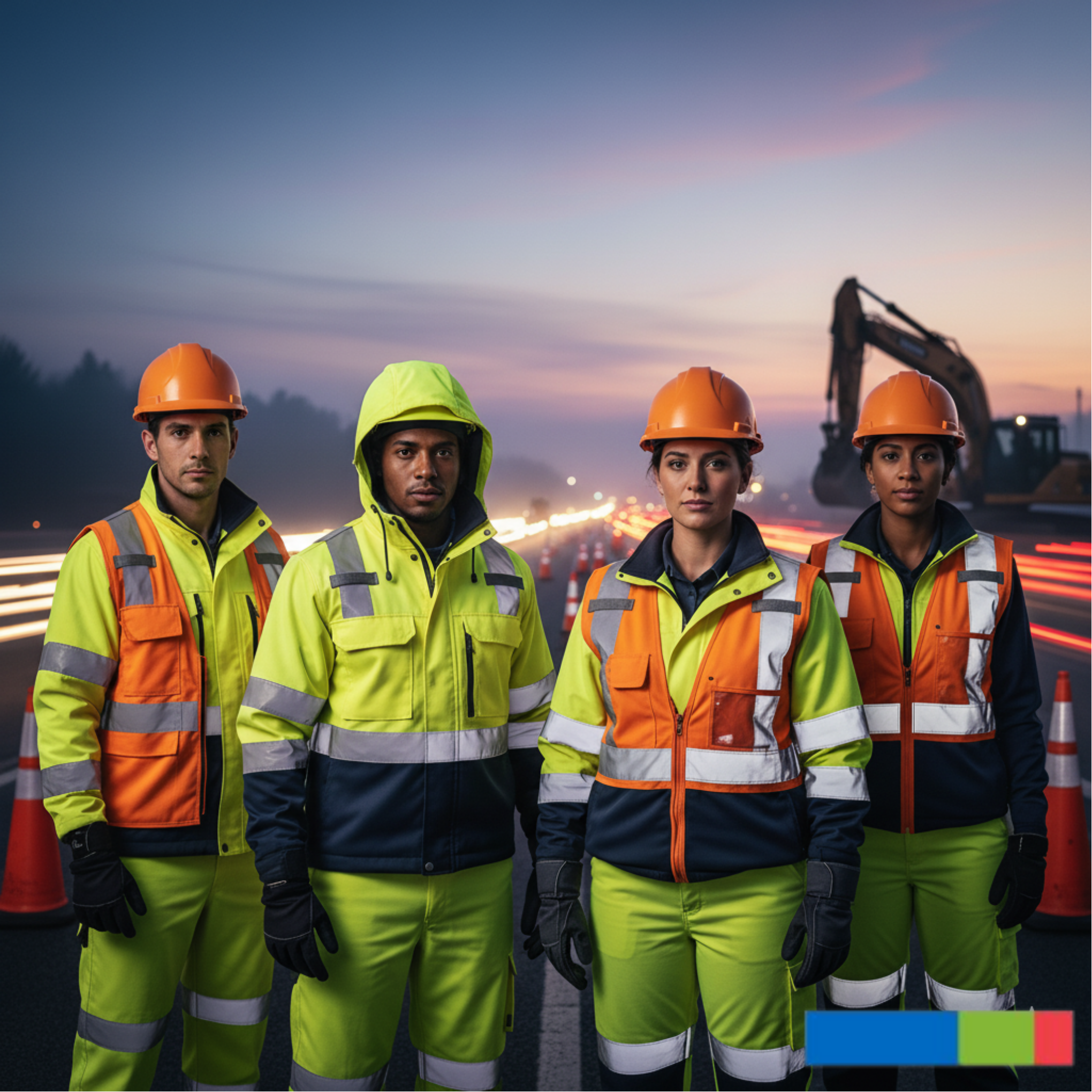
Welcome to our Ultimate Guide to High-Visibility (Hi-Vis) Clothing! In this blog, we’ll cover everything you need to know to stay safe and visible on the job. From understanding the science behind fluorescent and reflective materials to choosing the right class and type of Hi-Vis clothing – and even how to care for your gear – we’ve got you covered.
Here’s what you’ll learn in this guide:
- What Hi-Vis Clothing Is and Why It Matters
- How Hi-Vis Materials Work: Fluorescent vs. Reflective
- Dual-Performance Hi-Vis FR Clothing
- Hi-Vis Classes and Types Explained
- Key International and South African Standards
- Practical Safety and Usage Tips for Hi-Vis Gear
- Why Comfort and Fit Improve Safety
- Where Hi-Vis Clothing Is Essential
- Frequently Asked Questions
By the end, you’ll know exactly how to choose certified Hi-Vis apparel, use it effectively, and stay visible 24/7 in all work conditions.
UNDERSTANDING HI-VIS GEAR
So, what exactly is Hi-Vis clothing?
It is special gear designed to make you stand out and be easily seen, especially in dim, dark, or busy conditions. It’s not just about wearing something bright; there’s a science behind it!
Hi-Vis clothing has the following elements:
- Bright, Glowing Colours (Fluorescent Material): The vivid yellows, oranges, or reds you see. These colours are amazing because they absorb invisible light from the sun and turn it into light we can see. This makes them look extra bright and noticeable during the day, even on cloudy days.
- Reflective Strips: These are usually silver/grey strips. Unlike the bright colours, they don’t glow on their own. Instead, when light (like from car headlights or a flashlight) hits them, they bounce that light straight back to its source. This makes you incredibly visible in the dark or low-light conditions.
- Retroreflective surface: Ever wondered what materials the silver/grey strips are made from? These strips are typically manufactured using either tiny glass beads or high‑precision plastic microprisms which are bonded to textile materials using specialized binders and embossing processes. These specialized processes ensure the final product (i.e. the silver/grey strips) has a retroreflective surface whose main purpose is to reflect light back to its source.
This is an important feature as it ensures high visibility in low light or night-time environments and is a core requirement for compliance with internationally recognized standards for high visibility safety gear. - Important Note: Just because a piece of clothing is bright doesn’t automatically mean it’s “Hi-Vis.” Some bright items don’t meet strict safety rules and might not keep you truly safe. Always look for certified Hi-Vis gear.
How Hi-Vis Materials Work: Fluorescent vs. Reflective
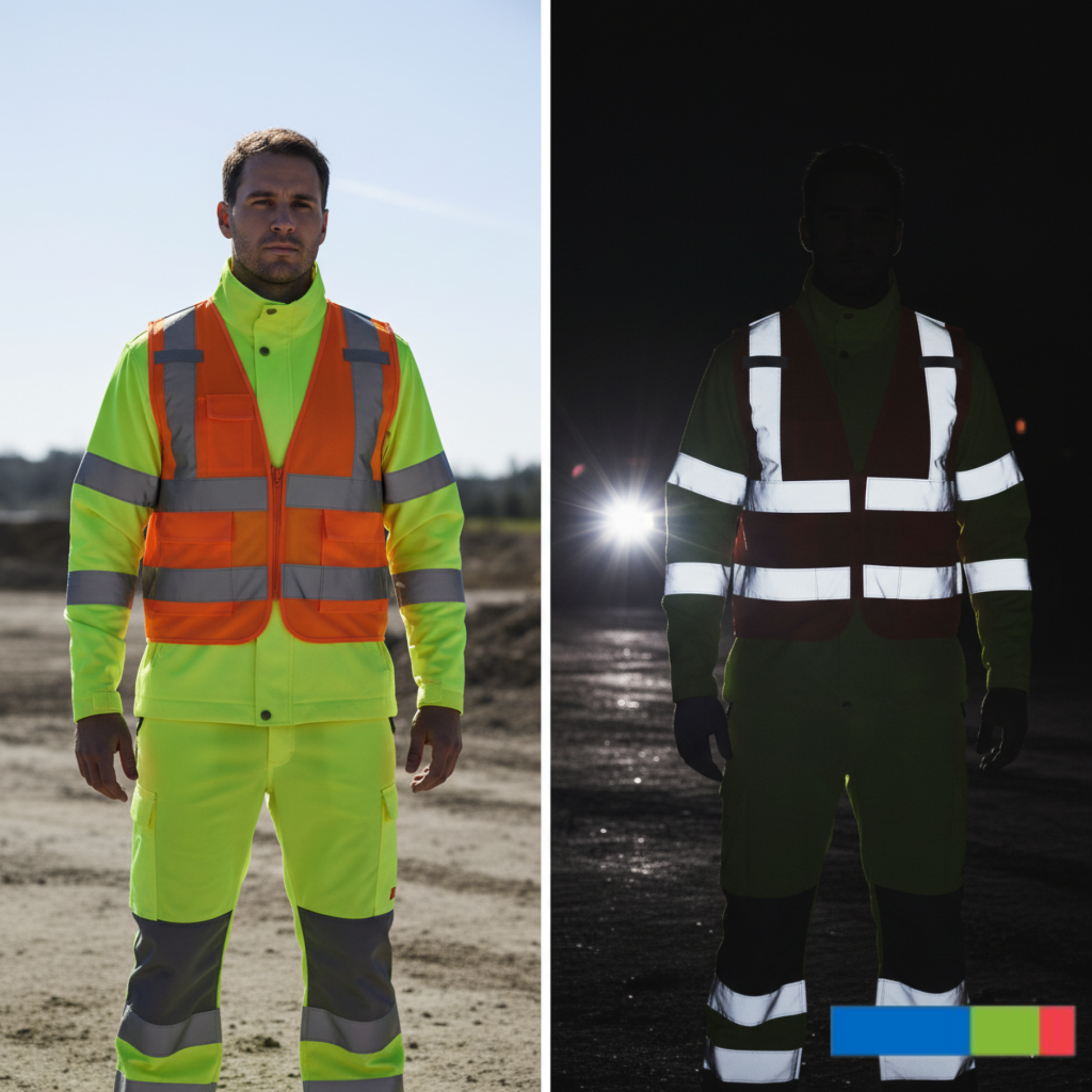
Understanding how hi-vis materialswork is key to staying safe on the job. High-visibility clothing isn’t just about wearing bright colours, it’s a combination of smart materials that make you visible in daylight, low light, and night-time conditions.
- Fluorescent Colours – Your Daytime Safety Boost
Fluorescent colours, like bright yellow, orange, and lime green, are designed to catch the eye. They work by absorbing invisible UV light from the sun and converting it into visible light. This makes you stand out against natural backgrounds, even on cloudy or overcast days.
When to Use Them: Fluorescent materials are perfect for outdoor jobs during the day, such as construction, roadwork, landscaping, and warehouse tasks. They ensure you’re easily seen by drivers, equipment operators, and coworkers.
- Reflective Strips – Your Night-time Visibility
Reflective strips are usually silver or grey and don’t glow on their own. Instead, they bounce light directly back to its source, like car headlights or flashlights. This creates a bright, attention-grabbing effect that makes you instantly visible in the dark.
When to Use Them: Reflective strips are essential for night-time work, early morning or dusk shifts, foggy conditions, and low-light environments. They’re a must-have for road crews, emergency responders, and airport ground staff.
- Why You Need Both
The smartest hi-vis gear combines fluorescent fabric and reflective strips. Fluorescent colours dominate during the day, while reflective strips take over at night. This combination ensures you are visible 24/7, in all weather conditions, on roads, construction sites, warehouses, and industrial workplaces. Choosing gear with both materials is crucial for maximum safety and accident prevention.
DUAL-PERFORMANCE HI-VIS FR CLOTHING
For workers who need both visibility and protection, dual-performance hi-vis FR clothing is a game-changer. This specialized workwear combines high-visibility safety apparel with flame-resistant protection, making it perfect for high-risk environments like construction sites, industrial plants, utilities, and emergency response teams.
Flame-resistant workwear is made from specially treated fabrics or inherently flame-resistant fibers that resist ignition. Unlike ordinary clothing, FR gear doesn’t continue to burn after the heat source is removed, offering critical protection in environments where sparks, open flames, or hot equipment are present. This makes it essential for electricians, welders, industrial workers, and first responders.
By combining hi-vis visibilitywith flame-resistant protection, dual-performance FR clothing provides all-in-one safety, helping workers stay visible and safe in the most hazardous conditions.
UNDERSTANDING HI-VIS CLASSES AND TYPES
Hi-Vis clothing isn’t one-size-fits-all. It’s divided into three classes and types, each offering a different level of visibility depending on the work environment and risks. Choosing the right class is essential to ensure maximum safety on the job.
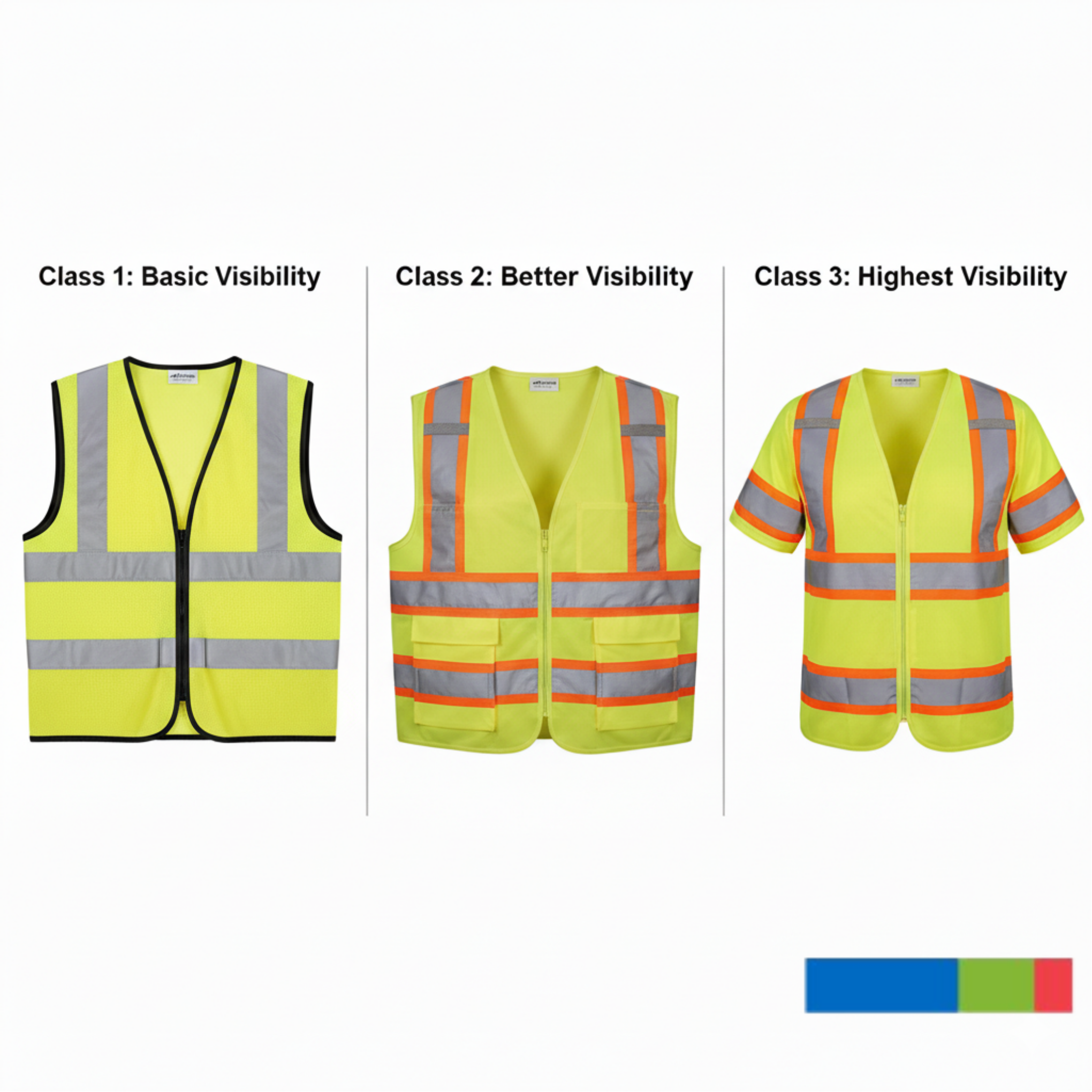
The 3 Classes of High-Visibility Clothing
- Class 1: Basic Visibility
Class 1 is designed for jobs with very little vehicle traffic, where any vehicles move slowly, such as in quiet warehouses or parking lots. Workers are usually separated from moving vehicles, so only minimal visibility is required.
Typical examples include simple hi-vis vests or trousers, often worn on their own.
- Class 2: Better Visibility
Class 2 provides enhanced visibility for workers closer to moving vehicles or in areas where traffic moves at moderate speeds, typically under 65 km/h. This class is also ideal for work in reduced daylight, light fog, or early morning/late afternoon conditions.
Examples include sleeveless hi-vis vests or shirts, commonly used by road repair crews, airport ground staff, and utility workers.
- Class 3: Highest Visibility
Class 3 is for high-risk jobs where workers are exposed to fast-moving traffic (over 65 km/h) or poor visibility conditions, such as night-time work on highways or during heavy fog. These garments provide the most coverage, helping drivers recognize a human shape from a distance.
Common examples are full long-sleeved jackets or full-body coveralls, often worn by highway construction crews, emergency responders, and flaggers controlling traffic.
The 3 Types of High-Visibility Clothing
Hi-Vis clothing is also categorized by work environment to match the level of risk.
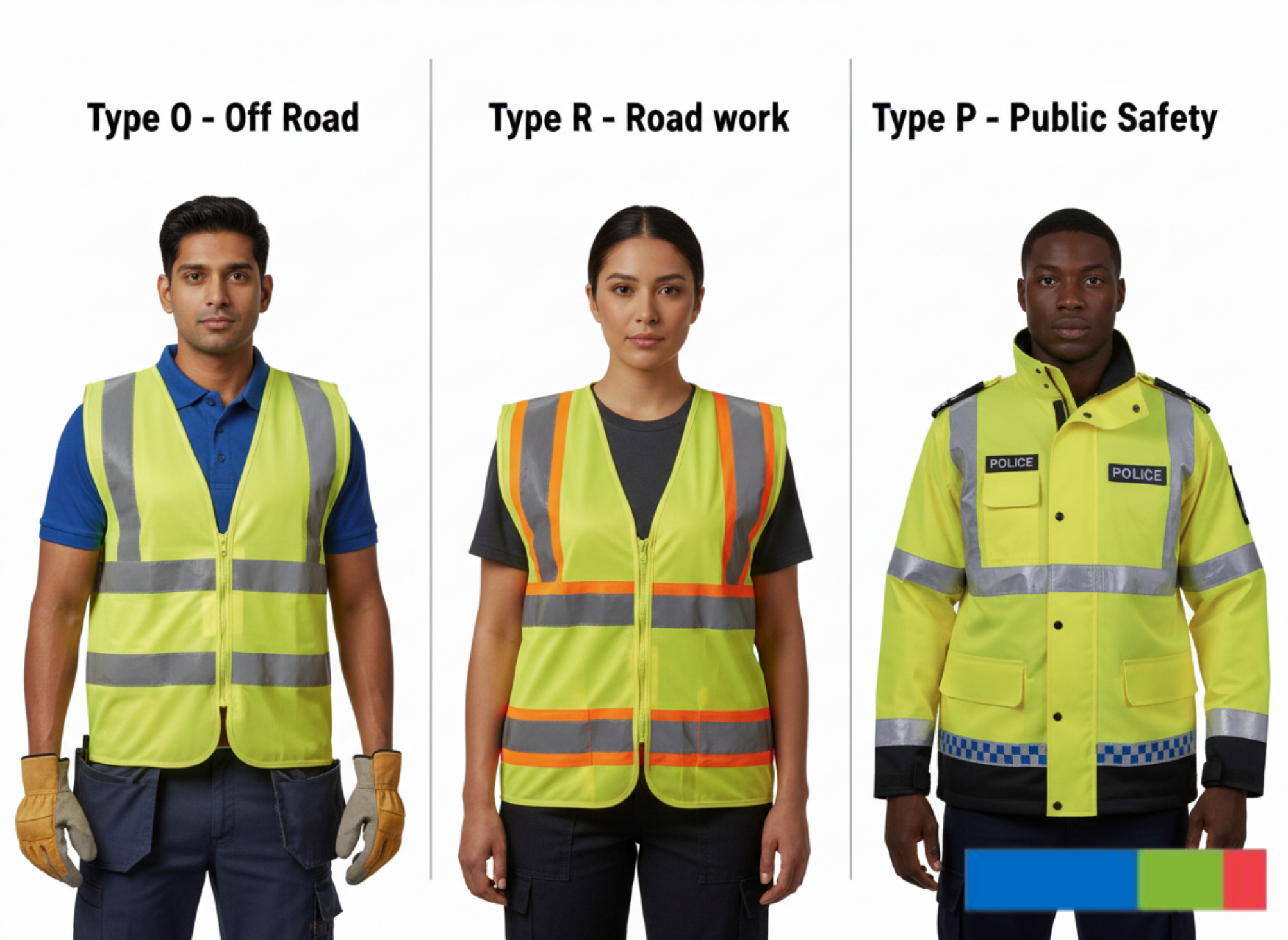
- Type O – Off Road
Type O is designed for workers in areas with heavy machinery but no public traffic. It ensures they stand out from moving equipment and vehicles. Typical users include warehouse workers, parking lot attendants, and oil and gas personnel.
- Type R – Road Work
Type R is for workers exposed to public traffic. It provides higher visibility for anyone working on or near public roads and highways. Examples include road construction crews, crossing guards, tow truck operators, and survey crews.
- Type P – Public Safety
Type P is designed for first responders who may face multiple hazards while on duty. It offers the highest level of visibility and protection. Common users include police officers, firefighters, and emergency medical personnel working in critical, high-risk situations.
To make things easier, we’ve created a clear at-a-glance guide that highlights the key differences between each class and type. This includes recommended work environments, visibility distance, traffic conditions, coverage, material requirements, and the industries where each class is commonly used. With this table, you can quickly choose the right hi-vis safety apparel to maximize visibility and safety on the job.
| Feature | Class 1 | Class 2 | Class 3 |
| Environment | Low risk | Moderate risk | High risk |
| Visibility conditions | Daylight only | Daylight and low-light | Daylight, Low-light, Night time, Fog and Poor weather |
| Visibility Distance | Visible at a shorter distance | Visible from moderate distance | Visible from the farthest distance in all conditions |
| Traffic Speed | < 30 km/h | 30-60 km/h | > 60 km/h |
| Type | Type O (Off-Road): Low visibility needed, low-risk areas. | Type R (Roadway): High visibility needed, high-speed traffic areas.Type P (Public Safety): High visibility needed for first responders | Type R (Roadway): High visibility needed, high-speed traffic areas.Type P (Public Safety): High visibility needed for first responders |
| Minimum required areas of visible material in m² | Minimal Reflective material – 0.10 m²Fluorescent material – 0.14 m² | Moderate Reflective material: 0.13 m²Fluorescent material: 0.50 m² | Maximum Reflective material: 0.20 m²Fluorescent material: 0.80 m² |
| Coverage | Torso and pants but with minimum visibility | Torso, more reflective tape | Torso, sleeves, full coverageThe retro-reflective tape should be on the shoulders and the sleeve elbows. |
| Work industries/ Work environment | 1. Warehouse workers (indoor) 2. Delivery drivers (non-highway) 3. Parking lot attendants 4. Construction site visitors 5. Landscapers 6. Maintenance staff (low-traffic zones) 7. Workers in well-lit indoor factories | 1. Road construction workers (non-highway) 2. Airport ground crew 3. Utility workers 4. Survey crews 5. School crossing guards 6. Forestry workers 7. Tow truck operators | 1. Highway road construction crews 2. Emergency responders near traffic 3. Flaggers and traffic control workers 4. Rail workers 5. Night shift road crews 6. Rescue or disaster recovery teams 7. Garbage and recycling collectors on busy streets |
Important Tip: It is not easy to instantly tell which vest belong to which class but, if you are still not sure, you can check the label or tag inside the vest.
SAFETY RULES: STANDARDS FOR HI-VIS CLOTHING
Why do official safety standards matter so much? Because they ensure that your Hi-Vis clothing actually works as it’s supposed to! Standards like EN ISO 20471 (Europe), ANSI/ISEA 107 (America), or SANS 50471 (South Africa) set strict rules for:
EN ISO 20471 (Europe and International)
This is the international gold standard for high-visibility safety apparel. It’s recognized worldwide and sets rigorous testing and design requirements for reflective workwear used in high-risk industries. Our South African standards are also aligned with this gold standard.
- What It Covers:
EN ISO 20471 specifies the minimum areas for fluorescent and retroreflective materials and even dictates how they must be positioned for 360° visibility. It ensures that drivers and machine operators can instantly recognize a worker’s human shape, even in low-light or high-speed environments.
Why It Matters:
This standard emphasizes colour durability, reflective performance, and wash resistance. It helps classify garments into Class 1, 2, and 3, based on the level of risk and visibility required. Always check for the CE mark and the EN ISO 20471 symbol on your gear – this confirms that it’s been independently tested and certified for professional use.
ANSI/ISEA 107 (USA)
The ANSI/ISEA 107 standard is the main rule used in the United States for high-visibility safety clothing. It’s trusted by many industries – from road construction and logistics to police and emergency services – to help keep workers visible and safe.
- What It Covers:
This standard explains how Hi-Vis clothing should look and perform. It divides safety clothing into different Types and Classes based on where and how the gear will be used:
- Type O (Off-Road): For areas with little or no vehicle traffic, like warehouses or factories.
- Type R (Roadway): For workers near moving vehicles or public roads.
- Type P (Public Safety): For emergency workers such as police officers and paramedics.
Each type can also be rated as Class 1, 2, or 3, depending on how much visibility and reflective coverage it provides.
- Why It Matters:
This standard ensures that Hi-Vis safety clothing is made with bright fluorescent colours and durable reflective tape that remain visible and effective, even after many washes. It also provides clear care instructions so your gear continues to perform at its best.
SANS 50471 (South Africa)
The SANS 50471 standard is South Africa’s national safety standard for high-visibility (Hi-Vis) clothing, is closely aligned with the international EN ISO 20471 standard.
- What it does:
This standard applies global safety requirements to South African workplaces. It sets the minimum visibility requirements for workers in high-risk environments such as mining, construction, roadwork, and industrial sites. It ensures that Hi-Vis clothing provides reliable visibility both during the day and at night, helping prevent accidents in busy or low-light areas. - Why it matters:
For South African workers, SANS 50471-certified Hi-Vis gear guarantees internationally recognized protection and performance. It ensures that manufacturers produce tested, durable, and compliant safety clothing, giving employers confidence that their teams meet legal and safety standards. Many industries – especially mining, road construction, and logistics – require this certification to ensure every worker is seen and protected on the job.
PRACTICAL TIPS FOR USING YOUR HI-VIS GEAR
Wearing Hi-Vis clothing is a great start, but how you use and care for it makes a big difference in its effectiveness.
- It’s Not a Magic Shield: Hi-vis clothing makes you much easier to see, but remember it doesn’t protect you from all dangers (like falling objects or chemical splashes). Always use other necessary safety gear too, such as hard hats, safety glasses, and steel-toed boots, depending on your work.
- Choosing the Right Gear: Always make sure the Hi-Vis clothing’s class matches the risks of your job and environment. A quick check of your work area’s conditions (day/night, traffic speed) helps determine the right choice. When in doubt, always go for a higher class.
WEARING AND CARING FOR YOUR HI-VIS CLOTHING:
- Keep it Clean: Dirt, oil, and grime can block the bright and reflective parts, making your clothing much less effective. Wash it regularly according to the instructions on the label. A dirty vest is a less safe vest!
- Wear it Correctly: Always make sure your hi-vis clothing is fully fastened and not covered by anything else (like a non-hi-vis jacket, a backpack, or a tool belt). The bright and reflective parts must always be visible to do their job.
- Know its Limits: Understand that while it helps you be seen, it’s part of a bigger safety picture that includes proper training, awareness, and safe work practices.
WHY COMFORT MATTERS FOR SAFETY:
Comfortable workers are safer workers. Poorly fitting or heavy gear can distract you or restrict movement.
- Good Fit: Your hi-vis should fit well – not too tight (which limits movement and can be uncomfortable) and not too loose (which can get caught in machinery or flap in the wind). A good fit ensures the material stays where it’s supposed to.
- Breathable Materials: Many modern hi-vis items are made with fabrics that let air through, keeping you cooler and more comfortable, especially during tough tasks or in warm weather. Comfort isn’t just about feeling good; it can help you focus on your work.
WHERE HI-VIS CLOTHING IS ESSENTIAL
Hi-Vis clothing is a must in many jobs, especially where:
- There’s heavy machinery or moving vehicles.
- You’re working in low light conditions (dawn, dusk, night, fog).
- Roads and Construction Sites: from slow-moving parking lots (requiring Class 1) to busy highways (demanding Class 3).
- Bad Weather: crucial in fog, snow, or heavy rain, often requiring weather-resistant features to keep you both visible and protected from the elements.
FINAL THOUGHTS: YOUR INVESTMENT IN SAFETY
Choosing and properly using the right high-visibility clothing isn’t just about following rules; it’s a smart investment in your safety and the safety of those around you.
By understanding the different classes, how the materials work, and how to care for your gear, you significantly improve safety for everyone in the workplace.
Always check your hi-vis clothing regularly to ensure it’s clean and in good condition, keeping you safe every day. Your visibility is your protection!
FREQUENTLY ASKED QUESTIONS
1. What certification or safety standards should I check before buying Hi‑Vis clothing?
Before buying Hi‑Vis gear, make sure it meets recognized safety standards. In South Africa, look for SANS 50471, which is closely aligned to EN ISO 20471, and sets minimum requirements for visibility, colour, and retro-reflection.
In the U.S., the relevant standard is ANSI/ISEA 107, defining garment types, classes, and labeling requirements for high-visibility safety apparel.
Check for:
- The standard mentioned on the garment or tag
- A label showing the class or type
- Certification confirmation from the manufacturer
Using uncertified Hi‑Vis clothing may leave you under-protected or non-compliant with workplace safety rules.
2. How long should Hi‑Vis clothing last, and when should I replace it?
Hi‑Vis clothing is effective only while the fluorescent fabric and reflective strips perform properly. Signs it’s time to replace your gear:
- Faded fluorescent colours or dull reflective strips
- Cracks, peeling, or damage on reflective tape
- Garment no longer fits properly
- Label/class no longer suits your work environment
Most certified garments have guidance on service life and wash cycles. Replacing worn Hi‑Vis ensures maximum visibility and safety.
3. Can I use the same Hi‑Vis clothing for all weather conditions?
Hi‑Vis gear increases visibility, but comfort and performance depend on weather conditions:
- Rain or fog: Waterproof or water-resistant jackets maintain brightness and reflective visibility
- Cold climates: Insulated garments retain warmth while keeping reflective/fluorescent elements effective
- Hot climates: Lightweight, breathable fabrics prevent heat stress while maintaining visibility
- Low-light/night work: Ensure sufficient reflective material and a higher class rating if near fast-moving vehicles
Choosing inappropriate gear can reduce compliance and compromise safety.
4. Is Hi‑Vis clothing enough to keep me safe on a job site?
No, Hi‑Vis clothing improves visibility but does not protect against all hazards. For full safety:
- Combine Hi‑Vis gear with other PPE (hard hats, gloves, steel-toed boots, flame-resistant clothing)
- Assess your environment for other risks such as falling objects, chemical exposure, or mechanical hazards
- Follow safe work practices, training, and situational awareness
Hi‑Vis is one component of a broader workplace safety strategy.
5. Can I wear Hi‑Vis clothing over other uniforms or add logos?
Yes, but visibility must not be compromised. Keep these points in mind:
- Fluorescent and reflective areas must remain fully visible
- Logos or branding should not cover the sections of the ppe that should remain fully visible
- Fit must still comply with the garment’s class/type
Proper layering or customization ensures safety compliance without reducing visibility.
6. How do I choose the correct class and type of Hi‑Vis clothing for my job?
Selecting the right class/type is critical:
- Assess the environment: Are you near moving traffic? High speeds? Night or low-light work?
- Class levels:
- Class 1: Low risk, slow-moving vehicles, indoor/low-traffic areas
- Class 2: Moderate risk, moderate traffic, dawn/dusk or light fog
- Class 3: High risk, fast-moving traffic, night shifts, heavy fog or poor visibility
- Types: ANSI/ISEA 107 defines Type O (off-road), Type R (roadway), and Type P (public safety) to match work hazards
- Tip: When unsure, choose a higher class for additional safety margin
Matching the class and type ensures your Hi‑Vis garment is effective for your specific work environment.
FIND YOUR PERFECT SAFETY GEAR!
Ready to make sure you and your team stay visible, protected, and compliant at work?
Whether you’re working in construction, roadwork, logistics and warehousing, emergency services, mining and industrial sites, utilities, or traffic control, RealPPE has the certified Hi-Vis safety clothing you can rely on.
At RealPPE, we’re passionate about workplace safety. Our mission is to help you choose the right high-visibility and protective gear that meets both local (SABS) and international (CE, ASTM) safety standards.
Our team of PPE experts is ready to guide you – from selecting the right materials and classes to ensuring every worker stays comfortable and compliant in any environment.
📧 Email: support@realppe.co.za
📞 Call: +27 11 568 4247
🌐 Website: www.realppe.co.za
RealPPE – Trusted Safety Solutions for Every Workplace.
Protect your employees. Protect your business. Be seen. Be safe.