
Ultimate Safety Footwear 2025 Guide (Part 2 – How to Choose, Maintain & Manage PPE the Right Way)


Welcome back to Part 2 of our Ultimate Guide to Safety Footwear!In Part 1, we explored what qualifies as safety footwear, how to identify certified protective shoes, and why gumboots can play a vital role in certain environments. Now, we move from understanding to application, focusing on selecting, maintaining, and managing your safety footwear for optimal long-term protection.
In this guide, we’ll cover:
- Understanding safety footwear standards
- Key features to look for in quality PPE
- How to choose the right footwear for your job
- Ensuring proper fit and comfort
- Maintenance and replacement tips
- Bulk buying for teams and organisations
- A final checklist before purchase
- Frequently asked questions
By the end of this guide, you’ll know exactly what to look for when buying safety footwear, how to maintain it, and how to ensure your investment continues to protect you every day.
Understanding Safety Footwear Standards
Certified safety footwear PPE must meet strict local and international testing criteria to ensure reliable protection against workplace hazards such as compression, punctures, slips, heat, and electrical risks.
Common Global and South African Standards
- SABS/SANS (South Africa): Regulates safety, protective, and occupational footwear under national safety laws. All approved footwear must carry a valid NRCS (National Regulator for Compulsory Specifications) certification mark. Importing or selling uncertified footwear without NRCS approval is illegal in South Africa.
- EN ISO 20345 (Europe): Defines minimum performance requirements for protective footwear, including impact and compression resistance for toe caps.
- ASTM F2413 (United States): Covers performance standards for impact, compression, puncture resistance, and other protective features.
Why Certification Matters
Always inspect the inside tongue, sole, or packaging for an official certification label. If the label is missing, unclear, or looks tampered with, the footwear may not be certified — meaning it does not legally qualify as PPE. Certified footwear ensures compliance, durability, and most importantly, worker safety.
Key Features to Look for in Quality Safety Footwear
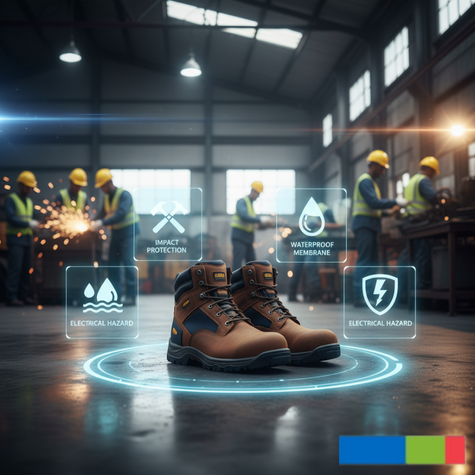
Different work environments demand different levels of protection. Below are essential features and what they mean for safety:
| Feature | Purpose | Ideal Use Case |
| Steel Toe Cap | Protects from falling objects or compression | Construction, heavy industry |
| Composite Toe Cap | Lightweight non-metal option for electrical safety | Electrical, transport, airport work |
| Slip-Resistant Sole | Prevents falls on oily or wet surfaces | Kitchens, factories, workshops |
| Puncture-Resistant Midsole | Protects against sharp objects on the floor | Warehouses, construction sites |
| Waterproofing | Keeps feet dry in wet environments | Mining, agriculture, outdoor work |
| Insulation | Protects from cold or heat | Foundries, refrigeration units |
| Electrical Hazard (EH) Protection | Reduces risk of electric shock | Engineering, utilities |
High-quality footwear combines several of these features while maintaining comfort and breathability.
How to Choose the Right Safety Footwear for Your Job
To make the best decision, evaluate your workplace hazards, environment, and comfort needs.
Ask yourself:
- Do I handle heavy materials or operate machinery?
- Are there electrical hazards or chemical spills?
- Do I work indoors or outdoors most of the time?
- How long are my typical shifts?
Practical Tips
- Try shoes at the end of the day when your feet are slightly swollen; this ensures a realistic fit.
- Wear the socks you normally use for work when trying on safety shoes.
- Move around walk, bend, and squat, to test comfort and flexibility.
- Check the inner lining and sole for cushioning and arch support.
- Ask for fitting assistance or measurement tools from your PPE supplier.
Getting the Right Fit
A certified shoe that does not fit properly can still lead to fatigue, blisters, and long-term foot problems.
Fit Guidelines
- Your toes should not touch the front of the shoe.
- There should be enough space to wiggle your toes freely.
- The heel must stay snug without lifting.
- The shoe should feel firm but not tight across the instep.
Comfort directly affects safety. Workers who wear ill-fitting shoes are more likely to trip, lose focus, or remove their footwear entirely.
Maintenance and Replacement: Making Your Footwear Last
Even the best safety footwear wears out over time. Regular inspection and care are essential for continued protection.
Maintenance Tips
- Clean daily: Wipe off dirt, mud, and chemicals after each shift.
- Dry naturally: Never place shoes near open flames or heaters; heat can weaken materials.
- Condition leather: Apply leather protectants or waterproofing treatments monthly.
- Replace insoles: Swap out worn insoles for proper cushioning every few months.
- Inspect regularly: Check soles, seams, and toe caps for cracks or separation.
When to Replace
- Visible cracks or holes in the sole.
- Loose toe cap or damaged stitching.
- Persistent odour or interior wear that causes discomfort.
- Loss of grip on smooth surfaces.

Buying in Bulk for Teams or Organisations
For employers and safety officers, bulk purchasing can be cost-effective while maintaining uniform compliance.
Best Practices
- Standardise requirements: Determine the right safety classification for each department.
- Request certification documents: Always verify SABS/SANS or ISO proof before bulk orders.
- Offer size variety: Stock a full range for both men and women.
- Evaluate supplier reliability: Check delivery timelines, warranty policies, and after-sales support.
- Plan replacements: Keep a six-month or yearly replacement schedule to avoid equipment fatigue.
Final Checklist Before Buying
- Certification: Are the shoes certified by a recognised safety standard (e.g.,SABS/SANS,EN ISO 20345,ASTM F2413)?
- Hazard-specific features: Do they offer the right protection for your workplace hazards (e.g., heat resistance, waterproofing, and puncture resistance)?
- Comfort: Are they suitable for long shifts of 8 –12 hours without causing discomfort or fatigue?
- Environment fit: Do you have the correct type of footwear for each unique work environment in your organisation?
- Supplier support: Does the supplier offer after-sales support, product warranties, and easy replacements when needed?
Final Thoughts
Choosing the right safety footwear is more than a compliance requirement—it is an investment in the health, safety, and productivity of every worker. Proper PPE, including certified safety shoes or boots, protects against workplace hazards such as impact, punctures, slips, extreme temperatures, and electrical risks.
A well-chosen pair of safety shoes not only reduces the risk of injury but also enhances comfort, confidence, and overall workplace performance. Remember: certification, correct fit, and consistent maintenance are the key factors that determine how well your footwear protects you over time.
Whether purchasing for yourself or managing safety compliance for an entire organisation, taking the time to select, maintain, and monitor your PPE ensures that every step your team takes is a safe one.
Step safely. Work confidently. Protect every foot withRealPPE.
Frequently Asked Questions
1. How often should safety footwear be replaced?
Safety footwear generally lasts 6 to 12 months, depending on how frequently it’s used and the intensity of workplace hazards. Shoes that are heavily used in construction, mining, or chemical environments may wear out faster. Replace your footwear immediately if you notice:
- Visible cracks, holes, or worn soles
- Loose or damaged toe caps
- Persistent odour or discomfort
- Loss of slip resistance or grip
2. Can I wash safety shoes in a washing machine?
No. Machine washing can compromise the structural integrity of your shoes, weaken adhesives, and reduce protection. Always clean safety footwear manually:
- Use mild soap and warm water
- Wipe dirt and mud after each shift
- Allow shoes to air dry naturally, away from direct heat or flames
- Apply leather or waterproof protectants monthly for long-lasting durability
3. What is the difference between safety, protective, and occupational footwear?
- Safety footwear: Includes reinforced toe protection (steel or composite) and may also include features like puncture-resistant midsoles, slip-resistant soles, and electrical hazard protection. Ideal for high-risk environments such as construction, mining, or manufacturing.
- Protective footwear: Offers some protection (slip resistance or minor toe protection) but does not meet full safety standards. Suitable for low-risk areas.
- Occupational footwear: Provides basic comfort and slip/abrasion resistance for office or light industrial work but lacks impact protection.
4. Are safety shoes mandatory for all industries?
No, not all industries require safety footwear. However, any workplace with potential hazards – construction, logistics, manufacturing, agriculture, or mining, requires certified safety footwear. In South Africa, employers must comply with the Occupational Health and Safety Act (OHS Act) to provide PPE, including certified safety shoes.
5. What size should I choose if I’m between two sizes?
It’s always best to go slightly larger and use supportive insoles if needed. A tight-fitting shoe can:
- Cause blisters and calluses
- Restrict blood circulation
- Reduce comfort and focus
A slightly loose shoe can be adjusted with insoles, ensuring proper fit, safety, and comfort during long shifts.
Learn More: PPE Fit Guidelines – OSHA
6. Can safety footwear also be stylish?
6. Can safety footwear also be stylish?
Absolutely! Modern safety footwear combines function and aesthetics:
- Lightweight, athletic-style shoes with steel or composite toe protection
- Slip-resistant soles with cushioned insoles for long shifts
- Variety of colors and designs suitable for professional or casual settings
Safety does not have to compromise style, workers can be protected and comfortable.
Check out: RealPPE’s range of certified, stylish safety shoes
Protect Every Step with RealPPE – Act Now!
When it comes to workplace safety, every step counts. RealPPE provides certified, durable, and comfortable safety footwear that meets South African and international standards.
- 📞 Call: +27 11 568 4247
- 📧 Email: support@realppe.co.za
- 🌐 Visit:www.realppe.co.za
Step safely. Work confidently. Trust RealPPE.